
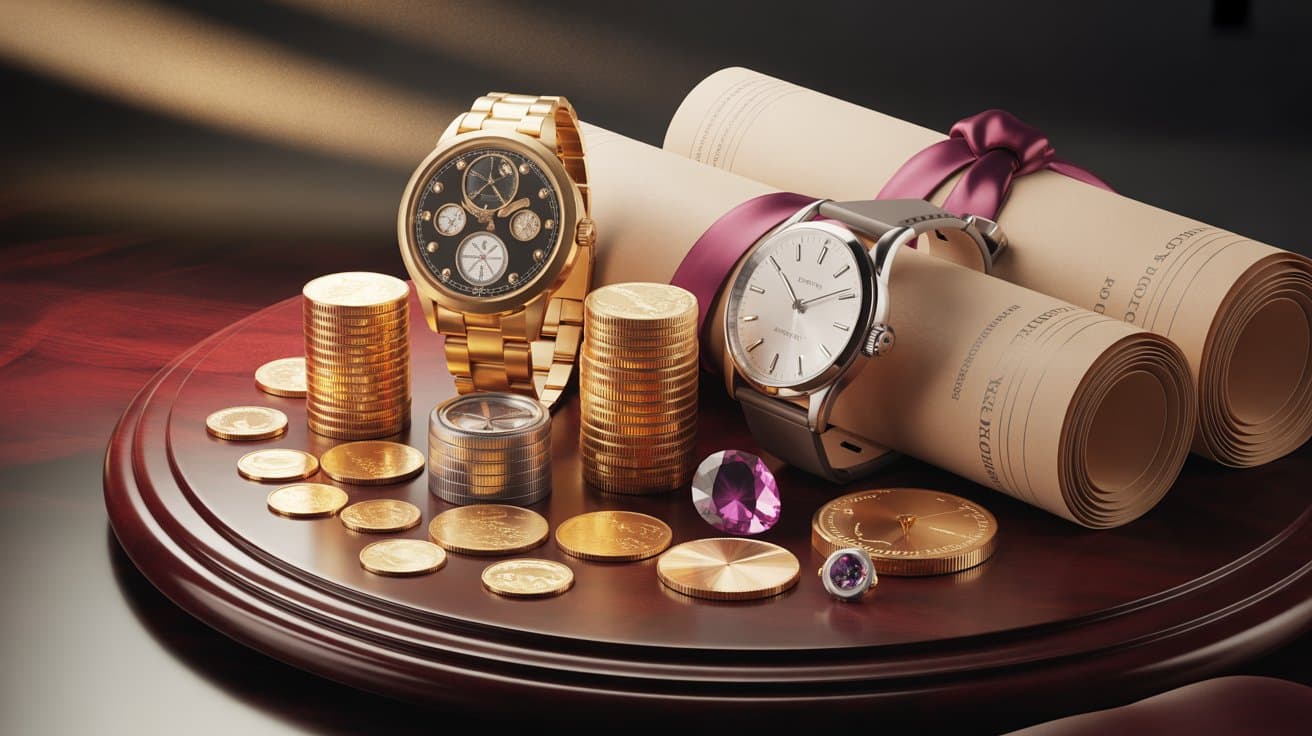
The Asset Class Matures: From Collecting to Allocating
BLUF — For Allocators
- Who this is for: Family office CIOs, UHNW individuals ($10M+ liquid), wealth managers, and RIAs with accredited clients seeking non-correlated diversification
- Target allocation: 5-10% of investable assets maximum; 1% is typical among global family offices; not core holdings
- Net return expectations: 6-10% annually after fees and taxes over 7-10 years; comparable to private equity with lower leverage
- Minimum tickets: Under $100K—retail wine platforms; $100K-$250K—diversified wine, fractional art; $250K+—institutional funds; $1M+—bespoke multi-asset portfolios
- Do NOT use for: Retirement accounts requiring RMDs; capital needed within 5 years; portfolios under $2M; income generation needs; daily liquidity requirements
The luxury and collectible investment landscape has undergone a fundamental transformation. What was once the exclusive domain of passionate collectors has evolved into a legitimate alternative asset class attracting institutional capital. Family offices now allocate approximately 1% of their portfolios to passion assets, representing roughly $31 billion of the $3.1 trillion in family office assets under management globally.
This shift from ownership to allocation reflects a broader financialization of passion. Rather than purchasing a Ferrari or Hermès Birkin bag for personal enjoyment, sophisticated investors now buy units in classic car funds or handbag portfolios managed by specialists with institutional deal flow and professional storage infrastructure. The luxury investment platform market itself was valued at $6.51 billion in 2024 and is projected to reach $13.02 billion by 2033, growing at 8.5% CAGR.
The investment thesis rests on several structural advantages: limited supply constrained by geography and production methods, rising global wealth creating demand from emerging economies, low correlation with traditional asset classes providing diversification benefits, and inflation protection through tangible asset ownership. Our correlation analysis of luxury assets versus stocks, bonds, and real estate shows that categories such as fine wine, art, watches, and whisky have often behaved independently during equity drawdowns—supporting their role as long-duration portfolio diversifiers rather than return-seeking assets. However, these benefits are cyclical, not permanent. The 2024–2025 period brought a necessary market recalibration: the Knight Frank Luxury Investment Index declined 3.3% in Q4 2024, marking only the third time the index has shown negative growth in its history. This reinforces why luxury exposure should be sized deliberately within a broader alternatives allocation, not treated as a standalone defensive hedge. For allocator guidance on fund structures, liquidity constraints, and risk controls, see our Luxury & Collectible Funds category.
This correction, while modest, represents a healthy market adjustment after years of post-COVID exuberance. Art declined 18.3%, high-value paintings over $10 million collapsed as higher interest rates flushed speculators from the market. Yet over longer timeframes, the fundamentals remain compelling. The same Knight Frank index delivered 21.4% returns over five years and 72.6% over the past decade, with rare whisky up 332%, watches gaining 146%, and art appreciating 131% over the 10-year period.
Implementation Playbook: How to Execute This Allocation
Before diving into fund mechanics and performance data, allocators need a clear execution framework. Here's how to implement a passion asset allocation in seven concrete steps:
- Step 1: Define Target Allocation and Time Horizon
Determine passion asset sizing within your alternatives bucket (typically 5-10% of investable assets, 1% for conservative allocators). Confirm minimum 7-10 year time horizon with no liquidity needs. Document investment committee approval for illiquid alternative allocation. Our passion asset allocation guide provides detailed sizing frameworks and model portfolios for UHNW investors. - Step 2: Decide Diversified vs Pure-Play Mix
Choose between mosaic approach (60% wine, 30% art, 10% whisky) for category diversification or concentrated conviction plays in single asset classes showing strong fundamentals. Diversified reduces volatility; pure-play amplifies category-specific returns. The same allocation guide walks through diversified vs pure-play portfolio examples by risk profile. - Step 3: Pre-Screen Funds by Structure and Jurisdiction
Filter platforms by minimum ticket size, accredited investor requirements, fund domicile (Luxembourg/Cayman for tax efficiency vs UK for wine CGT exemption vs US for regulatory transparency). Eliminate funds not matching your structural requirements before deeper due diligence. - Step 4: Run Standardized DD Checklist
Apply the seven-point screening checklist (detailed below) to remaining candidates. Request audited financials, custody documentation, valuation methodologies, and sample redemption timelines. Conduct reference calls with existing LPs. Site visit storage facilities if investing $500K+. - Step 5: Model Fee and Tax Drag vs Target Net Returns
Build return scenarios at 5%, 10%, 15% gross appreciation over 7-10 years. Deduct management fees, performance fees, storage, insurance, exit commissions, and applicable taxes (28% US collectibles rate or relevant jurisdiction). Compare net IRR to target returns and alternative asset class opportunities. - Step 6: Phase Capital Over 12-24 Months
Avoid lump-sum entry during market peaks. Deploy capital in quarterly tranches to dollar-cost-average across market cycles. The 2024-2025 correction illustrates timing risk: art down 18% creates entry opportunity, but further declines possible. Phased approach mitigates this risk. - Step 7: Establish Review Cadence and Rebalancing Rules
Set annual review schedule for NAV verification, performance attribution, and category rebalancing. Define triggers for redemption requests (underperformance vs benchmark, manager changes, strategy drift). Document decision-making framework for investment committee.
This systematic approach transforms passion asset allocation from opportunistic into a repeatable, institutionally rigorous process. The sections below provide the technical depth needed to execute each step effectively.
Luxury & Collectible Funds Explained: What They Are and How They Work
For institutional allocators and high-net-worth individuals, the decision to access passion assets through funds rather than direct ownership comes down to a fundamental cost-benefit analysis around what we call the "Three Ls": Logistics, Liability, and Liquidity. Our platform's access guide compares leading wine, art, whisky, watch, and multi-asset vehicles by minimums, fees, custody, and liquidity.
Access and Deal Flow
Professional fund managers possess institutional relationships that individual collectors cannot replicate. Wine funds negotiate directly with châteaux for en primeur allocations and secure entire cellar purchases from estates before they reach public auction. Art funds like Masterworks acquired over 400 paintings since 2017, leveraging relationships with galleries, private dealers, and auction houses to access works before they're publicly marketed.
WhiskyInvestDirect, as a platform aggregating demand from thousands of investors, purchases young whisky directly from distillers including Diageo, Pernod Ricard, and Suntory at wholesale pricing unavailable to retail buyers. This institutional scale creates arbitrage opportunities: cask investment companies typically charge prices three times higher than WhiskyInvestDirect's crowd-sourced model offers for equivalent whisky.
The "Hassle Premium": Solving Logistics
Storage and preservation requirements for investment-grade collectibles are substantial. Fine wine demands constant temperature between 10-15°C with 70% humidity in vibration-free environments. Art requires museum-quality climate control with UV filtration. Whisky casks must remain in government-bonded warehouses to maintain duty-free status and avoid immediate taxation.
Cult Wines maintains storage at bonded facilities in Melksham, UK, eliminating the £240 million AUM storage burden from individual investors. Masterworks stores artworks in Delaware Freeport and Uovo facilities with Lloyd's of London insurance coverage. These specialized storage solutions, while standard for funds, represent significant complexity and cost for direct owners.
Liability: Provenance and Insurance
Authentication and provenance verification have become critical as forgery sophistication increases. Art funds employ teams of experts and conduct extensive due diligence; Masterworks reports that fewer than 3% of evaluated artworks pass their screening process. Wine funds verify bottles through relationships with châteaux and maintain complete chain of custody documentation.
Insurance coverage for high-value collectibles requires specialized policies with premiums typically 0.5-1% of asset value annually. Funds spread this cost across diversified portfolios and negotiate institutional rates. Individual owners face higher premiums and must manage claims processes directly if theft or damage occurs.
Liquidity: Structured Exits vs. Distressed Sales
Perhaps the most compelling fund advantage is liquidity management. Individual collectors facing urgent capital needs must sell at auction during potentially unfavorable market conditions, paying 10-25% buyer and seller premiums. A $100,000 artwork might net only $80,000 after commissions if sold quickly.
Funds structure redemption windows and maintain relationships with wholesale buyers, private collectors, and auction houses to optimize exit timing. Cult Wines' trade and wholesale team typically liquidates portfolios within 8-12 weeks at market prices. Masterworks offers a secondary marketplace where shareholders can exit before the fund sells the underlying artwork, though liquidity is not guaranteed.
Tax Efficiency Through Structure
Sophisticated fund structures provide tax optimization unavailable to direct owners. UK-based wine funds holding assets in bonded warehouses avoid Capital Gains Tax on appreciation until bottles are removed for consumption. Luxembourg SPVs and Cayman structures defer VAT and minimize transaction taxes on improved assets until exit.
However, US investors should note that collectibles face a maximum 28% long-term capital gains rate, higher than the 20% rate for stocks and bonds. The Net Investment Income Tax adds 3.8% for high earners. Tax efficiency depends heavily on fund domicile, investor jurisdiction, and holding period.
Fund Structures and Mechanics
The GP/LP Model: Private Equity for Passion Assets
Most luxury and collectible funds operate using the General Partner/Limited Partner structure familiar from private equity. General Partners (the fund managers) provide expertise in sourcing, authentication, storage, and eventual sale of assets. Limited Partners provide capital and receive proportional returns based on their investment.
The standard fee structure mirrors hedge funds: "2 and 20" meaning 2% annual management fee on assets under management plus 20% carried interest on profits above a hurdle rate. Cult Wines employs a tiered structure: Premier Cru tier ($35,000 minimum) charges 2.75% annually, Grand Cru ($150,000 minimum) charges 2.50%, Cult Cru ($700,000 minimum) charges 2.25%, and Black Tier ($1.5 million minimum) charges 2% annually.
Masterworks uses a similar framework with 1.5% annual management fee plus 20% performance fee, though these fees accrue as equity rather than cash payments. This structure aligns manager incentives with investor outcomes: fund managers only profit significantly if the underlying assets appreciate substantially.
The "Mosaic" Portfolio: Diversification Strategies
Luxury funds fall into two categories: diversified multi-asset portfolios and pure-play single-category specialists. Diversified funds construct mosaic portfolios blending multiple passion asset classes to reduce concentration risk. A typical allocation might include 40% fine wine spanning Bordeaux, Burgundy, and Champagne, 30% contemporary art from established blue-chip artists, 15% rare whisky casks, 10% investment-grade watches from Patek Philippe, Rolex, and Audemars Piguet, and 5% in emerging categories like classic cars or luxury handbags.
Pure-play funds offer concentrated exposure to managers with deep category expertise. Cult Wines focuses exclusively on investment-grade wine, while Masterworks specializes in post-war and contemporary art by blue-chip artists. WhiskyInvestDirect provides access only to Scotch whisky intended for blending, capitalizing on the bulk trade market between distillers.
Index-Tracking: Providing Beta Exposure
Some funds employ passive strategies tracking established benchmarks. The Artprice100 index, maintained by Artmarket.com, simulates investment in the world's 100 top-selling artists weighted by five-year auction revenue and liquidity. Artists must have at least ten works sold annually to qualify for inclusion. This index returned 1.55% in 2023 and delivered over 405% cumulative growth since 2000.
Similarly, the Liv-ex Fine Wine 1000 tracks 1,000 wines across Bordeaux, Burgundy, Champagne, Rhône, Italy, and the rest of the world. Wine funds often shadow this benchmark or its more focused Liv-ex 100 index to provide systematic exposure to the fine wine market rather than making concentrated bets on specific vintages or regions.
Typical Returns & Risks of Passion Asset Funds
Understanding historical returns across luxury asset classes is essential for institutional allocators constructing diversified passion asset portfolios. However, past performance does not guarantee future results, and the illiquid nature of these assets makes return calculation methodologies critical.
| Asset Category | 10-Year Return (2014-2024) | 5-Year Return (2019-2024) | 1-Year Return (2024) | Key Drivers |
|---|---|---|---|---|
| Rare Whisky | +332% | +37% | -10.3% | Aging premium, Asian demand, limited supply |
| Watches | +146% | +52.7% | +1.7% | Limited production, younger collectors, brand heritage |
| Art (Blue-Chip) | +131% | +21.4% | -18.3% | Masterpiece scarcity, wealth concentration, museum demand |
| Fine Wine | +72.6% | +21.4% | -7.2% | Consumption depletion, vintage quality, climate change |
| Handbags | +108% | +38% | +2.8% | Hermès scarcity, wearable investment, identity signaling |
| Classic Cars | +93% | +16% | +1.2% | Family legacy, nostalgia, limited production models |
Source: Knight Frank Luxury Investment Index 2025, compiled from auction data and secondary market transactions. Returns are gross of fund management fees and transaction costs.
Comparison with Traditional Asset Classes
The diversification case for passion assets rests on their historically low correlation with traditional equities and bonds. Over the 2000–2024 period, the Artprice100 demonstrated slightly negative correlation with the S&P 500, meaning art prices tended to move independently from U.S. equities. During 2022, when the S&P 500 declined 19%, the Artprice100 gained 3%, providing defensive characteristics during market turmoil. However, this relationship is cyclical rather than permanent—our correlation analysis of luxury assets versus stocks, bonds, and real estate shows that correlations can rise during liquidity-driven selloffs, reinforcing why passion assets should be sized as long-term diversifiers rather than tactical hedges.
Fine wine showed similar resilience. The Liv-ex 1000 maintained relative stability during both the 2008 Global Financial Crisis and the 2020 COVID-19 outbreak. This stability stems from wine's fundamental supply-demand dynamics: geographic production constraints, inevitable consumption reducing supply, and growing global wealth creating persistent demand regardless of equity market performance.
However, these correlation benefits should not be overstated. During the 2024 correction, most luxury categories declined simultaneously, suggesting that at market extremes, correlation with risk assets increases as collectors reduce discretionary spending and liquidate holdings to meet margin calls or rebalance portfolios.
Top Platforms and Investment Vehicles
Diversified Wine: Cult Wines
Cult Wines represents the gold standard in wine investment platforms, managing £240 million in assets across diversified portfolios of investment-grade wine. Founded in 2007 by Tom and Phil Gearing, Cult Wines democratized fine wine investment by providing end-to-end portfolio management tailored to client objectives.
The platform delivered 17.27% returns over five years with 3.24% CAGR, outperforming the Liv-ex 100 benchmark which posted 8.29% over the same period. Since inception in October 2009, Cult Wine Investment Performance achieved 159.66% cumulative returns, equivalent to 6.49% CAGR.
Cult Wines integrates with Liv-ex, the global marketplace for fine wine trade, providing real-time pricing transparency and liquidity. The platform's proprietary AI-driven statistical models analyze millions of data points to identify wines with optimal relative value and growth prospects. Storage occurs in bonded facilities with comprehensive insurance, and investors can request physical delivery or sell holdings through the wholesale network.
The minimum investment is £10,000, with tiered fee structures based on portfolio size. Premier Cru tier starts at $35,000 with 2.75% annual fee and access to dedicated relationship managers. Grand Cru tier begins at $150,000 with 2.50% fees, while Cult Cru tier at $700,000 charges 2.25% annually.
Art-Specific: Masterworks vs. Anthea
The art investment landscape features two distinct approaches. Masterworks pioneered fractional art ownership through SEC-registered offerings, allowing non-accredited investors to purchase shares of individual blue-chip artworks starting at $20 per share. Since launching in 2017, Masterworks acquired over 400 paintings with a rigorous selection process: fewer than 3% of evaluated artworks pass due diligence.
Masterworks has completed 23 exits, all profitable, with annualized net returns including 17.6%, 17.8%, and 21.5% for assets held over one year. The platform charges 1.5% annual management fee plus 20% carried interest on profits, structured as equity deductions rather than cash payments. A secondary marketplace provides potential early liquidity, though not guaranteed.
The minimum investment is officially $15,000 for first-time investors, though this can be waived at the platform's discretion. Masterworks provides extensive market research leveraging their database of over 50 million art auction data points covering 15,000+ artists. Research reports detail artist sales history, price trajectories, and risk-adjusted performance using Sharpe ratios.
Anthea Art Fund operates as a traditional closed-end fund targeting institutional investors and family offices. Rather than fractional ownership of individual works, Anthea constructs diversified portfolios of contemporary art selected by experienced curators and art advisors. The fund structure requires longer commitment periods without secondary market options, but provides exposure to a broader cross-section of the contemporary art market rather than single-work concentration risk.
Spirits: WhiskyInvestDirect Platform
WhiskyInvestDirect revolutionized whisky cask investment by aggregating retail investor demand to achieve institutional scale. As a subsidiary of BullionVault (which pioneered similar crowd-sourced gold ownership), the platform purchases young Scotch whisky directly from distillers including Diageo, Pernod Ricard, Whyte & Mackay, CVH Spirits, and Suntory at wholesale prices.
Investors buy whisky by the liter of pure alcohol (LPA) stored in government-bonded warehouses, maintaining duty-free status. The platform offers a live 24/7 order board where investors trade with each other, distillers, blenders, or WhiskyInvestDirect itself, whoever offers the best price. This creates genuine market-determined pricing rather than opaque dealer markups.
Historical returns are compelling. Eight-year old Scotch whisky bought new and sold each year from 2015-2024 delivered average returns of 11.7% per annum net of all platform costs. Returns increase as whisky matures: new make malt purchased in 2015 at £2.60 per liter reached £9.00 by 2024, while grain rose from £1.00 to £3.50.
The fee structure is transparent: 1.75% commission on purchases and sales, plus £0.218 per liter of pure alcohol annually for storage and insurance (£3 monthly minimum). There are no management fees or carried interest, making it significantly cheaper than traditional cask investment companies which typically charge prices three times higher for equivalent whisky.
Minimum investment is flexible given the per-liter pricing, though most investors start with at least £1,000-£2,000 to achieve basic diversification across multiple whisky types. The platform currently offers 31 different Scotch whiskies ranging from Highland and Speyside malts to grain whisky for blending.
Emerging: Classic Car and Handbag Funds
Classic car funds remain less developed than wine and art vehicles, often structured as private clubs or special purpose vehicles rather than formal investment funds. This reflects the operational complexity: cars require specialized storage, regular maintenance, insurance covering both static display and potential driving, and expertise in restoration and preservation.
Nevertheless, classic cars delivered strong long-term returns. According to the Knight Frank index, classic cars gained 93% over the past decade, though growth moderated to just 1.2% in 2024. Investment focuses on limited production models from marques like Ferrari, Porsche, Aston Martin, and Mercedes-Benz with provenance and originality documentation.
Luxury handbag funds represent an even newer category, capitalizing on the fact that handbags were the best-performing luxury asset in 2024 with 2.8% gains. Hermès Birkin and Kelly bags, particularly exotic leather versions with diamond hardware, have shown remarkable price appreciation. A Himalaya Birkin with diamond hardware sold for $330,000 at Sotheby's in 2024.
However, handbag funds face authentication challenges (sophisticated counterfeits flood the market), condition sensitivity (leather ages and hardware tarnishes), and limited wholesale market infrastructure compared to wine or art. Most handbag investment remains direct purchases through authorized retailers or trusted resale platforms like The RealReal rather than formal fund structures.
Risk Assessment and Due Diligence Checklist
Critical Fund Screening Checklist
If a fund fails 2 or more of these checks, walk away.
The Liquidity Trap: Understanding Lock-Up Reality
The single most important risk factor in luxury and collectible funds is illiquidity. Despite marketing materials describing "quarterly redemption windows," these are typically offered on a "best effort" basis with no guarantee of execution. Fund managers may gate redemptions if too many investors request exits simultaneously, limiting withdrawals to 5-10% of fund NAV per quarter.
Most luxury funds impose 5-7 year initial lockup periods. Cult Wines states typical holding periods of 5-10 years for wine to mature properly. Masterworks holds artworks for an average of 3-10 years before selling, though their 23 exits averaged only two years, suggesting opportunistic sales of rapidly appreciating works. WhiskyInvestDirect provides 24/7 liquidity within its marketplace, but this depends on finding a willing buyer at acceptable prices.
The liquidity process for Cult Wines typically requires 8-12 weeks to liquidate a portfolio, depending on size and wine selection. During market downturns, this timeline extends as wholesale buyers become more selective. Unlike publicly traded REITs or equities with continuous market liquidity, passion asset funds require patient capital and should not be considered for any funds needed within five years.
Valuation Opacity and NAV Calculation
Unlike stocks with exchange-traded prices, collectibles lack continuous price discovery. Fund valuations depend on periodic appraisals by third-party experts or mark-to-market using comparable auction results and dealer quotes. This creates opportunities for manipulation if fund managers control the appraisal process.
Critical due diligence question: who marks the book? Reputable funds employ independent third-party valuation services with no financial interest in inflated NAVs. Cult Wines uses Liv-ex market prices to value holdings monthly, providing transparent pricing based on actual trading activity. Masterworks provides appraisals through independent art advisory firms.
Warning signs include funds that self-appraise or use affiliated valuation services, infrequent NAV updates (quarterly or annually rather than monthly), significant divergence between reported NAVs and eventual sale prices, and resistance to providing detailed valuation methodologies.
The "Fee Drag": Calculating True Hurdle Rates
The total cost of ownership in luxury funds significantly exceeds headline management fees. Consider a comprehensive fee analysis for a wine fund:
- 2.5% annual management fee on average account balance
- 20% carried interest on profits above 8% hurdle rate
- 0.5-1% annual storage costs in bonded warehouses
- 0.3-0.5% annual insurance premiums
- 10-13% auction commission if selling at auction
- VAT and transaction taxes depending on jurisdiction
This cumulative fee structure means the underlying assets must appreciate approximately 5-6% gross annually just to break even before investors see any net return. A 20% gross return over 10 years, after 1.5% annual fees, 20% performance fee, and 13% auction commission, might deliver only 7.5% compound annual return to the investor—barely exceeding historical stock market returns with significantly lower liquidity.
Investors must model fee structures across various return scenarios before committing capital. The break-even calculation is essential: what gross return must the fund achieve for investors to earn their target net return after all costs? If the answer exceeds historical category averages, the investment may not be economically compelling.
Counterparty Risk and Custody Verification
Perhaps the most critical due diligence item: verify that you own the assets, not just an unsecured creditor claim against the fund. In 2024, the City of London Police investigated Cask Whisky Ltd, resulting in court-mandated liquidation. Customers without proper delivery orders faced an uphill battle proving ownership of casks they believed they purchased.
Reputable funds provide segregated custody where assets are held in your name at third-party facilities. WhiskyInvestDirect publishes a complete register of all whisky owners monthly (audited), with each owner listed under a public nickname known only to themselves. This transparency ensures that if WhiskyInvestDirect itself fails, investors own the whisky directly rather than holding unsecured claims.
Similarly, verify storage facility credentials. London City Bond, Octavian Vaults, and other specialized bonded warehouses maintain detailed inventories. For art, Delaware Freeport and Uovo provide climate-controlled storage with extensive security and insurance. Investors should receive documentation confirming specific assets are held in their name at these facilities, not commingled with fund company assets.
Market Timing and Cycle Awareness
The luxury and collectible market exhibits clear cyclicality despite long-term appreciation trends. The 2024-2025 correction following the post-COVID boom illustrates the importance of entry timing. Art declined 18.3%, wine fell 7.2%, and even rare whisky dropped 10.3% after years of rapid appreciation.
Bain & Company projects the luxury market will contract 2-5% in 2025 with a 60% probability, a 20% chance of deeper 5-9% declines, and only 20% likelihood of flat to modest growth. This projection, based on macroeconomic data and interviews with over 100 experts, suggests current entry points may be opportune for contrarian investors but risky for those requiring short-term appreciation.
Historical analysis shows that luxury downturns rarely exceed two years. The 2008 financial crisis saw wine and art decline for 18-24 months before recovering. The COVID-19 initial shock lasted only 6-9 months before the massive stimulus-driven rally. Investors with 5-10 year horizons and entry discipline can potentially capitalize on market corrections, but those forced to exit during downturns face significant losses.
Tax Optimization and Legal Structures
Collectibles Tax Treatment in the United States
US investors face less favorable tax treatment for collectibles compared to stocks and bonds. The IRS classifies wine, art, watches, and other passion assets as collectibles, subject to a maximum long-term capital gains tax rate of 28% rather than the 20% rate applying to securities. Short-term gains (assets held less than one year) are taxed at ordinary income rates up to 37%.
Additionally, high-income investors face the 3.8% Net Investment Income Tax on collectibles gains, bringing the total maximum federal rate to 31.8% before considering state taxes. In California, with top state rates reaching 13.3%, total tax on collectibles gains could exceed 45%. Our tax and estate planning guide for passion assets quantifies this tax drag on $500K–$5M exits and explains how step-up in basis, charitable donations, GRATs, and other structures can reduce it.
This tax treatment creates a hurdle for US-based investors. A wine portfolio appreciating 8% annually over 10 years (119% cumulative gain) would face 28-45% tax on exit, potentially reducing net returns to 4-5% annually after taxes and fees. By comparison, an index fund growing at the same rate faces only 20-33% combined federal and state taxes.
UK Wine Exception: Bonded Warehouse Advantage
UK-based wine investors benefit from a significant tax advantage: wine held in bonded warehouses avoids Capital Gains Tax entirely until removed for consumption. This exemption stems from wine's classification as a "wasting asset" with a useful life under 50 years.
Cult Wines and other UK-based wine funds store assets in bonded facilities in Melksham and similar locations, allowing UK investors to compound returns tax-free. Only when bottles are physically delivered for consumption does duty and VAT become due. If wine is sold within the bonded warehouse system (as most investment-grade wine is), no CGT applies.
This creates asymmetric advantages for UK-domiciled wine funds versus art, whisky, or other collectible funds which do not enjoy similar exemptions. For UK taxpayers, wine investment through bonded warehouse funds may be the most tax-efficient passion asset allocation.
Offshore Structures: Luxembourg and Cayman SPVs
Sophisticated funds employ Luxembourg or Cayman Islands structures to minimize transaction taxes and defer investor-level taxation. Luxembourg is particularly popular for art and wine funds given its specialized legal frameworks for alternative investment funds and favorable VAT treatment.
Under Luxembourg rules, artwork acquired and stored within bonded free ports (such as Luxembourg Freeport) avoids VAT on import. When eventually sold, VAT applies only to the margin (sale price minus acquisition cost) rather than the full sale proceeds, significantly reducing tax leakage. Similar rules apply to wine and spirits.
Cayman SPVs offer tax neutrality: no capital gains tax, no income tax, no withholding taxes. This allows non-US investors to access luxury funds without triggering home country taxation until distributions occur. However, US investors generally cannot benefit from Cayman structures due to PFIC (Passive Foreign Investment Company) rules that impose punitive tax treatment on foreign investment vehicles.
The complexity of cross-border tax structuring requires professional guidance. Family offices and UHNW investors should consult international tax counsel before investing in offshore luxury funds to understand reporting obligations, FATCA compliance, and ultimate tax efficiency relative to domestic alternatives.
Portfolio Construction: The Passion Allocation
Determining Appropriate Sizing
For most sophisticated investors, passion assets should represent 5-10% of investable wealth maximum. Family offices globally allocate approximately 1% to art and antiques as part of broader alternative asset allocations averaging 44% of portfolios. This modest sizing reflects the risks outlined above: illiquidity, valuation opacity, high fees, and market cyclicality.
Conservative investors focused on retirement income should avoid luxury funds entirely. The illiquidity conflicts with required minimum distribution obligations, and the lack of yield means no income generation during holding periods. These funds work only for investors who can afford complete illiquidity for 5-10 years and seek non-correlated returns as diversifiers rather than core portfolio holdings.
Aggressive allocators comfortable with alternatives might increase to 10-15% of liquid net worth, splitting between diversified wine, concentrated art, and opportunistic whisky or watch funds. This diversification across passion categories reduces single-asset concentration risk while maintaining aggregate exposure to the luxury sector's long-term growth.
Diversified vs. Pure-Play Allocation
The choice between diversified multi-asset funds and pure-play category specialists depends on investor expertise and conviction. Diversified funds like those offering mosaic portfolios across wine, art, watches, and cars provide category diversification but charge management fees on the entire AUM including lower-returning segments.
Pure-play funds allow investors to express conviction in specific categories showing strong fundamentals. An investor believing rare whisky will continue outperforming due to Asian demand and aging premiums might allocate entirely to WhiskyInvestDirect rather than accepting wine or art dilution. This concentrated approach amplifies both upside potential and downside risk.
A balanced strategy might allocate 60% to diversified wine funds (providing stable exposure to the most liquid passion asset), 30% to concentrated art funds targeting contemporary blue-chip artists, and 10% to opportunistic whisky cask investments capitalizing on current market corrections. This barbell structure provides both defensive diversification and tactical conviction.
Rebalancing Discipline and Market Timing
Unlike stocks with daily pricing, passion asset rebalancing occurs annually at best given redemption limitations. Nevertheless, disciplined rebalancing during market cycles can enhance returns. The 2024-2025 correction offers a case study: art declining 18% while handbags gained 3% created significant relative value opportunities.
Investors with the liquidity to rebalance might reduce art exposure during the downturn, redirecting capital to wine funds experiencing more modest 7% declines or to whisky casks down 10% after years of outsized gains. This contrarian approach buys depressed assets and trims winners, though execution is challenging given illiquidity and redemption gates.
The alternative is strategic fixed-allocation maintenance, accepting that passion assets drift as a portfolio percentage based on their independent return profiles. This passive approach avoids transaction costs and timing risks but may result in overweight allocations to categories experiencing bubbles or underweight positions in recovering assets.
Conclusion: The Case for Institutional Passion Asset Allocation
The financialization of luxury and collectibles has created legitimate investment opportunities for family offices, UHNW individuals, and accredited investors seeking non-correlated diversification beyond traditional stocks, bonds, and real estate. Professional fund structures solve the Three Ls of direct ownership while providing access to institutional deal flow unavailable to individual collectors.
However, these opportunities come with meaningful constraints. Illiquidity requirements of 5-10 years eliminate most retail investors and anyone needing portfolio flexibility. Fee structures averaging 3-4% annually plus 20% performance fees create high hurdle rates requiring strong gross returns to generate acceptable net outcomes. Valuation opacity and custody risks demand extensive due diligence beyond typical investment analysis.
For the right investor—high net worth, patient capital, seeking 8-12% long-term returns with low correlation to public markets—luxury and collectible funds represent a compelling 5-10% portfolio allocation. The luxury market is projected to reach $570-615 billion by 2030, more than double its 2020 size, driven by wealth creation in Asia and intergenerational wealth transfers in developed markets.
The key is entering with realistic expectations, appropriate allocation sizing, and commitment to the full investment horizon. Luxury funds are not get-rich-quick vehicles or alternatives to diversified equity portfolios. They are specialized tools for sophisticated investors implementing comprehensive alternative asset strategies that include private equity, real estate, infrastructure, and yes, passion assets as part of a truly diversified wealth preservation and appreciation plan.
Those who understand the luxury fund value chain, perform rigorous due diligence on custody and valuations, size positions appropriately within broader portfolios, and commit to the full investment cycle will be best positioned to capture the financialization of passion and compound wealth through assets that are not just investments but also objects of enduring beauty, craftsmanship, and cultural significance.
For allocators evaluating whether passion assets fit within a broader alternative strategy, we provide deeper analysis across specific categories. Our category-specific guides cover wine fund selection and Bordeaux vs Burgundy allocation strategies, whisky cask investment mechanics and distillery comparison frameworks, blue-chip art vehicle structures and contemporary versus post-war positioning, and multi-asset passion portfolio construction models with institutional case studies. These resources enable precise execution of the seven-step implementation playbook outlined above.