AI Infrastructure & Compute
The emerging asset class behind AI — GPU yield, decentralized compute, tokenized data centers.
Overview
AI infrastructure represents the physical and digital backbone of the generative AI boom—GPU networks, decentralized compute marketplaces, and data center REITs. With global AI infrastructure spend projected at $1T+ by 2030, investors access yield through compute token staking (8-20% APY), data center dividends (3-6%), and protocol governance. The sector includes established REITs (Digital Realty, Equinix) and emerging decentralized networks (Render, Akash, Bittensor).
Key Benefits
- Direct exposure to AI infrastructure demand without equity risk
- Staking yields on compute tokens: 8-20% APY (variable)
- REIT dividends provide stable income stream with public market liquidity
- Decentralized compute 30-60% cheaper than AWS/GCP for batch workloads
- Growth tailwinds: Enterprise AI adoption, sovereign AI initiatives, edge computing expansion
Platform Reviews
In-depth analysis using our three-pillar evaluation framework
USD.AI
USD.AI turns stablecoin deposits into loans to companies that run GPU servers. Its base token, USDai, is backed one for one by PayPal's PYUSD: on Arbitrum, the PYUSD reserve matched the USDai supply AltStreet counted at the pin to the cent. The yield token, sUSDai, is where the risk sits: on November 10, 2026, 40% of its $441.6 million was GPU loans, 29% was one $128.9 million escrow for a deal not yet funded, which HIVE Digital's filings indicate is its BUZZ Alpha Cloud GPU cluster, and 30% was cash in the vault. The loans are on chain and match the published book, and no default has been recorded on chain. The advertised 7.00% is a target supported by a foundation reserve, and four operational Safes share the same three signer addresses.
GAIB
What backs AID: GAIB reports GPU loans and reserves; on chain, about $236,000 of stablecoins (1.5% of the 16.14 million AID outstanding) is visible at the addresses GAIB labels as reserves, and the loans appear in no contract. How long it takes to get out of sAID: 30.6 days from request to claim at the median across 2,164 completed claims observed, 61.9 at the longest, on a schedule the operator sets each month.
Compute Labs
What does a Compute Labs GPU vault investor actually own? The help center says 'You, the investor, hold legal title' and that each GPU is 'bound to an SPV (Special Purpose Vehicle) fully managed by Compute Labs'. What the subscription agreement grants, and where a holder stands relative to the senior lender that financed part of the one public vault, are set in documents that are sign-in only. On chain, the investor holds a Solana token whose mint and freeze authorities sit with one wallet address; US investors are locked up for a year and no redemption right is described. The company's own dated figure for that vault, 32 NVIDIA H200s, is distributions of 'roughly 44% annualized' through September 2, 2026, which it says combine income and return of capital.
Aethir
Aethir is a decentralized GPU cloud whose ATH token sits under most of what an investor can hold in its ecosystem: staking pools paying about 12% to 14% a year in ATH, Checker Node licenses bought for 41,902.65 wETH in March 2024, a program for GPU owners who must stake ATH, and loans against future token rewards. ATH traded about 85% lower over the year to October 4, 2026 and 93% below its listing-day high, so for anyone who held through that year the price decline overwhelmed the rewards. Aethir's KYC, required before ATH can be claimed or withdrawn from its products, accepts only 'users not from USA'. The main US-listed company tied to ATH is Axe Compute (Nasdaq: AGPU), which uses ATH to buy GPU capacity on the Aethir network and receives extra ATH from Aethir's developer when it buys on the open market.
Latest Research & Analysis
View All
How to Invest in AI Infrastructure: Data Centers, GPUs and Compute (2026 Guide)
How to invest in AI infrastructure and data centers: public stocks and REITs, private funds, GPU-backed lending and compute tokens, with returns and risks.

AI Infrastructure Investing: The Complete Portfolio Allocation Framework for the Physical Layer
Build a diversified AI infrastructure portfolio across data center REITs, semiconductors, energy stocks, and DePIN tokens. Complete allocation models inside.

GPU Investment ROI: Payback Periods for H100, H200 and MI300X Clusters
What is the ROI of a GPU cluster? Payback math for H100, H200 and MI300X, utilization and rental rate assumptions, buy versus lease, and residual value risk.
Beyond the Hype: A Framework for Valuing Power, Cooling, and Credit Risk in AI Data Centers
Master data center valuation with analysis of PUE metrics, liquid cooling economics, interconnection risks, and tenant credit quality.
Risk Management in AI Infrastructure: Hedging Power, Compute, and Credit
Hedge token volatility, grid congestion, and leverage traps in AI infrastructure with institutional risk frameworks for data centers and GPU networks.
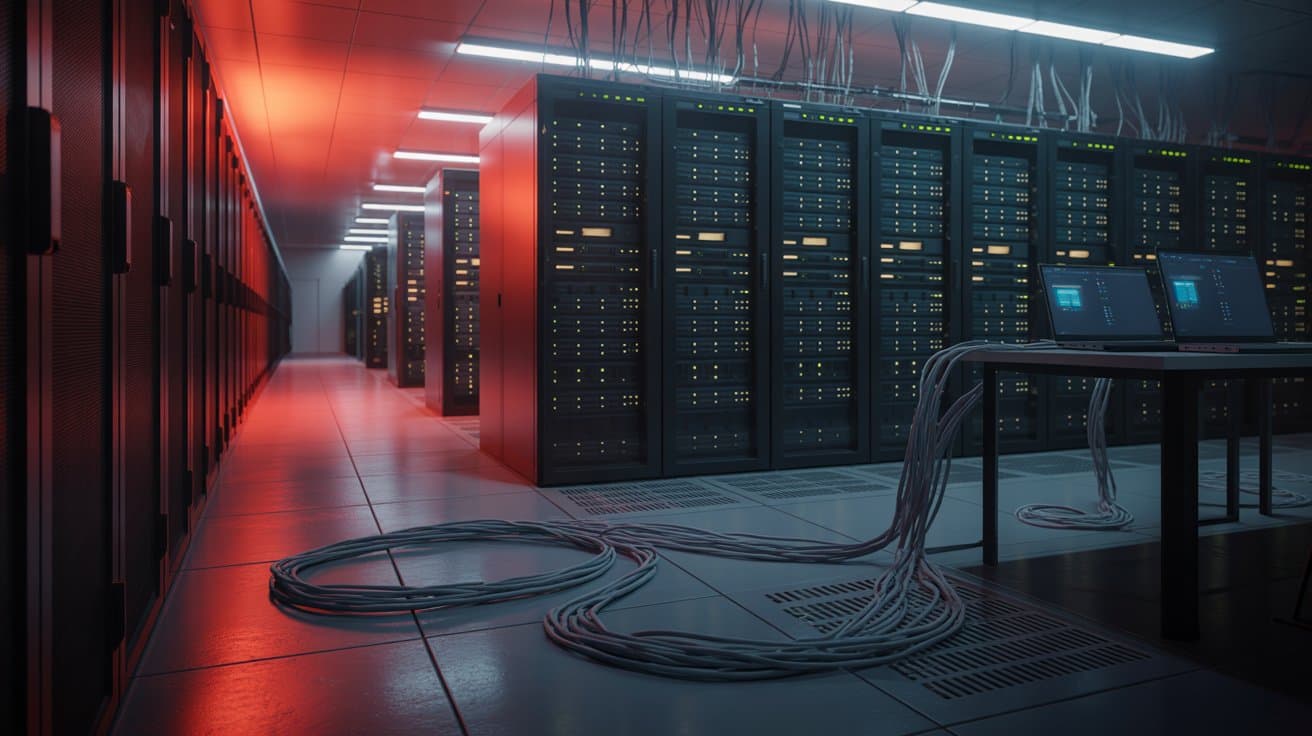
When $8 Trillion Froze: The CME Derivatives Outage and AI's Hidden Infrastructure Crisis
A chiller plant failure froze global derivatives trading for 11+ hours, exposing how AI's thermal demands push legacy cooling infrastructure past breaking points—creating the "Cooling Resilience Premium" for investors.
Start with the guide
How to invest in AI infrastructure
Data center REITs, private funds, GPU-backed lending and compute tokens, with returns and risks.
Read the guideCloud GPU pricing comparison
Live and dated per-hour prices for H100, A100, RTX 4090 and L40S across nine providers.
Read the guideGPU financing guide
Loans, leases and securitizations against GPUs: advance rates, SOFR spreads, covenants, who lends, eligibility and the term sheet.
Read the guideAccessing AI Compute Investments
Start with REIT Exposure
Data center REITs (DLR, EQIX, COR) offer liquid, dividend-paying access to AI infrastructure. Buy through any brokerage. These are the safest entry point with 3-6% yields.
Explore Compute Token Staking
Protocols like Render (RNDR), Akash (AKT), and Bittensor (TAO) offer staking yields of 8-20%. Requires crypto wallet setup and understanding of validator economics.
Understand Token Utility
Compute tokens are NOT just speculative assets—they represent network usage rights. RNDR = GPU rendering, AKT = cloud compute, TAO = AI model inference. Yield comes from network fees.
Allocate Conservatively
Recommend 60% REITs (stable), 30% large-cap compute tokens (RNDR, TAO), 10% emerging protocols. Compute tokens are high-risk/high-reward.
AI Infrastructure Investment Risks
Important considerations before investing in ai infrastructure & compute
- Token volatility: Compute tokens can drop 70-90% in crypto bear markets despite utility
- Network adoption risk: Many protocols have minimal revenue despite high token valuations
- Centralization concerns: Some "decentralized" networks dominated by few large providers
- Competition from hyperscalers: AWS, Azure, GCP can undercut decentralized pricing
- Regulatory uncertainty: SEC classification of utility tokens remains unclear
- Technical complexity: Staking/validation requires technical expertise; slashing penalties for errors
- REIT interest rate sensitivity: Rising rates pressure REIT valuations and dividend coverage
Due Diligence Checklist
- Check token utility: Does staking actually generate revenue or just dilutive emissions?
- Verify network usage metrics: Active providers, compute hours sold, revenue (not just TVL)
- Assess validator economics: What is the true yield after infrastructure costs and slashing risk?
- Compare pricing to AWS/GCP: Is decentralized compute actually cheaper for target workloads?
- Review tokenomics: Inflation rate, vesting schedules, team allocation
- For REITs: Analyze occupancy rates, tenant quality, lease terms, debt-to-equity ratios
Real-World Examples
Render Network: 200,000+ GPUs, $40M+ in rendering completed. Token up 400% in 2023.
Digital Realty: Paid uninterrupted dividends for 15+ years. Stock +120% from 2020-2023.
Akash: 90% cheaper than AWS for certain batch workloads, but limited enterprise adoption.
AI Infrastructure & Compute: frequently asked questions
What are data center REITs?
Real estate investment trusts that own and lease data centers. Nareit's data center sector had three constituents at August 31, 2026: Equinix (EQIX), with an equity market value of $103.2 billion, Digital Realty (DLR) at $67.0 billion, and Iron Mountain (IRM) at $34.3 billion, whose business also includes records storage. Like other REITs they must pay out most of their taxable income as dividends.
Source: Nareit REITWatch, September 2026 (data to August 31, 2026)
How have data center REITs performed?
Volatile, in both directions. Nareit's data center sector returned 33.04% in 2026 through August 31, against 14.49% for all equity REITs, after a 14.20% loss in 2025. Its dividend yield was 2.36%, lower than most REIT sectors because investors price in growth.
Source: Nareit REITWatch, September 2026 (data to August 31, 2026)
How do you invest in data centers?
Through data center REITs listed on stock exchanges; ETFs that hold data center REITs and digital infrastructure companies; shares of companies that rent out AI computing capacity, such as CoreWeave, which went public in March 2025; utilities and equipment makers that supply power and cooling; or private infrastructure funds, usually for accredited or institutional investors. Each carries a different mix of real estate, technology and tenant risk.
Is AI infrastructure a good investment?
Demand has grown fast: Digital Realty reported second-quarter 2026 revenue of $1.9 billion, up 29% from a year earlier, and a record backlog. The risks are a building boom that outruns demand, concentration in a few very large tenants, power availability, and chips and servers that become obsolete within a few years. AltStreet's longer analysis covers the bull and bear cases.
Sources: Digital Realty second-quarter 2026 results (SEC exhibit); AltStreet: is AI infrastructure a good investment?
What are GPU compute tokens?
Crypto tokens used to pay for, or reward, computing power on decentralized networks, such as Render (RENDER), Akash (AKT) and Bittensor (TAO). Their prices move with crypto markets and token supply, not with the rental income of the hardware, so they behave very differently from data center REITs. Grayscale filed an amended registration on October 23, 2026 to turn its Bittensor trust into an exchange-traded product; it had not been approved when this was written.
AI infrastructure reference library
How GPU, compute and data center investments are structured, priced and underwritten. 31 terms.
AI Infrastructure & Compute
- AI Inference vs Training Economics
- AI Model Hosting Agreements
- Colocation Lease
- Committed Use Contracts
- Compute Demand Volatility
- Compute Token Mechanics
- Data Center Capacity Markets
- Decentralized Compute Networks
- GPU Collateralization
- GPU Depreciation & Obsolescence Risk
- GPU Refresh Cycle
- GPU Rental Economics
- GPU Residual Value Insurance
- GPU Residual Value Risk
- GPU Securitization
- GPU Supply Agreements
- GPU Utilization Rate
- Grid Interconnection
- H100 vs. B200 Economics
- Hyperscale Data Center Leasing
- Landlord Waiver (Collateral Access Agreement)
- Liquid Cooling
- Power Usage Effectiveness
- Proof of Useful Work
- Rack Density
Power contracts for data centers
How compute capacity secures and pays for electricity.
All terms: AltStreet reference index and glossary.
Advanced Guides
Is AI Infrastructure a Good Investment? Complete 2026 Analysis
Expert evaluation of the $7 trillion AI infrastructure build-out: data centers, compute capacity, energy generation, and institutional investment pathways.
GPU Rental Prices: What 11,962 Live Offers Reveal
Analysis of 11,962 live GPU rental offer observations: a nearly 7x same-week H100 spread, a 13.7x normalized compute-cost range, and what actually drives the price you pay.
Explore Subcategories
Compute Tokens
Tokens like RNDR, AKT, TAO and their yield mechanisms.
Decentralized GPU Marketplaces
Platforms renting GPU infrastructure and compute networks.
Token Staking & Rewards
Validator economics, yield from staking compute-infrastructure tokens.
AI Infrastructure REITs
Data center and AI infrastructure real estate funds.