Tokenized Real-World Assets
Where traditional finance meets blockchain — treasuries, credit, and real estate on-chain.
Largest SEC filers in tokenized rwa
Ranked by the total reported sold on the latest Form D or Regulation A notice. Each page carries the filing record, the related persons and what to check; AltStreet gives no verdict on an issuer.
- Invesco Short Duration US Government Securities Fund, a separate series of Superstate Asset Trust2026 · $5.9B · 114 investors · Superstate
- BlackRock USD Institutional Digital Liquidity Fund Ltd.2026 · $5.1B · 28 investors · Securitize
- Ondo I LP2026 · $1.9B · 84 investors · Ondo Finance
- Kabompo Holdings, Ltd.$344M · 28 investors · Paxos
- Superstate Crypto Carry Fund, a series of Superstate Asset Trust2025 · $211M · 43 investors · Superstate
- VanEck Treasury Fund, Ltd.2026 · $168M · 15 investors · Securitize
- Securitize Tokenized Apollo Diversified Credit Fund, Ltd.2026 · $111M · 26 investors · Securitize
- Superstate Inc.$95.4M · 41 investors · Superstate
- Reflexive Capital Digital Asset Fund, LLC2025 · $77.1M · 80 investors
- tZERO Group, Inc.2018 · $75.9M · 920 investors · tZERO
- Superstate Native Yield Fund2026 · $28.0M · 1 investors · Superstate
- Coinbase Tokenized Stablecoin Yield Feeder Fund Ltd2026 · $25.0M · 2 investors · Superstate
- Franklin Templeton Blockchain Fund II, L.P.2025 · $24.4M · 10 investors
- Ondo Finance Inc.$19.9M · 28 investors · Ondo Finance
- Dinari, Inc.$18.7M · 45 investors · Dinari
- Kingsly Digital Asset Fund, LP2026 · $11.3M · 34 investors
- Hamilton Lane SCOPE Securitize Tokenized Feeder, LP2025 · $9.7M · 64 investors · Securitize
- Valinor BDC Exposure Fund, a series of Superstate Asset Trust2026 · $8.0M · 2 investors · Superstate
- Keiretsu Capital Blockchain Fund of Funds, L.P.2025 · $7.9M · 61 investors
- Keiretsu Capital Blockchain Fund of Funds II, LP2025 · $7.7M · 54 investors
Overview
Tokenized Real-World Assets (RWA) bring traditional finance on-chain—U.S. Treasuries, private credit, real estate, and commodities represented as blockchain tokens. The sector reached $12B in tokenized value (2024), led by tokenized treasuries ($2.2B). Investors earn 4-9% yields on-chain with 24/7 liquidity, instant settlement, and transparency. Major issuers include Ondo Finance (OUSG, USDY), Franklin Templeton (BENJI), and BlackRock (BUIDL). This is the most institutional-grade crypto category with regulatory clarity and traditional finance backing.
Key Benefits
- 24/7 trading and instant settlement vs. T+2 for traditional securities
- Fractional ownership: Access $5M private credit funds with $100 minimums
- Transparent on-chain verification of reserves and yields
- Composability: Use tokenized Treasuries as DeFi collateral
- Lower fees than traditional funds (0.15-0.50% vs. 0.50-2.00%)
- Regulatory compliance: Many tokens are SEC-registered or Reg D offerings
Platform Reviews
In-depth analysis using our three-pillar evaluation framework
Ondo Finance
Ondo sits among the largest tokenized-Treasury issuers in crypto by onchain value, running two businesses under one brand: an asset-management arm (OUSG, USDY, Global Markets) and an infrastructure arm (Nexus, Flux, Ondo Chain), plus a governance token that, by Ondo's own framing, holds no direct claim on either's cash flows.
Maple Finance
Maple is an onchain institutional credit marketplace where professional pool delegates originate overcollateralized loans to crypto-native borrowers and lenders earn real loan interest — a multi-billion-dollar credit book (platform-reported ~$4.59B AUM, $11.27B cumulative originated) wrapped for permissionless access via syrupUSDC/syrupUSDT, but structured offshore in the Cayman Islands with no US Form D footprint and a governance token down ~76% from its 2025 peak.
Securitize
AltStreet read the offering documents or full deal disclosures for eight Securitize-issued or -administered vehicles, swept 31 affiliated SEC EDGAR entities, and verified the platform's post-NYSE-listing corporate record. The finding that matters: the Securitize brand is one distribution rail, but the wrapper terms underneath it vary enormously — minimums from $1,000 to $5,000,000, liquidity from daily redemption to permanently non-redeemable shares, and governance from an independent board to a manager that can only remove itself. The diligence unit is the individual offering document, not the platform.
Polymesh
A FINMA-classified, purpose-built Layer 1 for regulated securities — where identity, compliance, and governance are base-layer primitives and node operators are permissioned entities that Polymesh describes as licensed financial entities — whose native token has de-rated ~94% from its 2024 peak even as the network reports institutional adoption and ecosystem partners.
Backed Finance
Backed tokenizes stocks and ETFs as offshore tracker-certificate debt instruments (168 products across 11 chains giving on-chain economic exposure to names like Tesla, the S&P 500, and even private companies) issued offshore through a Jersey SPV for non-US persons, with no US registration and an on-chain price that is set by thin DEX/CEX liquidity rather than the exchange's close.
YLDS (Figure Certificate Company)
YLDS is a face-amount certificate issued by Figure Certificate Company, an SEC-registered subsidiary of Figure Technology Solutions: an unsecured, interest-bearing debt security with a $0.01 face amount, paying overnight SOFR minus 0.35% and surrenderable at any time. Its reserves were short Treasury bills and Treasury-backed repurchase agreements at June 30, 2026, KPMG audits its annual statements, and it paid out $762.8 million of surrenders in the first half of 2026. What the marketing leaves out is how little capital the issuer has of its own and who the holders are. At June 30, 2026, qualified assets exceeded the statutory reserve requirement by $4.2 million, GAAP equity was $994,000, and $477.5 million of the $556.0 million outstanding (85.9%) was classified as related-party holdings. The issuer relies on its parent, which committed in a June 30, 2026 letter to satisfy any obligations FCC cannot meet when due through September 30, 2027.
Superstate
Superstate runs a shelf of tokenized private funds and the SEC-registered transfer agent that keeps their registers. Qualified purchasers can buy four funds through it, each from $100,000: USTB (Treasury bills; Invesco; 0.15%; same-day redemption), USCC (crypto basis trade; Bitwise; 0.75%; daily), CUSHY (stablecoin credit; Coinbase Asset Management; 0.75% plus a 10% performance fee; quarterly redemptions) and VBDC (listed BDCs; Valinor; 1.25%; daily, gated). Superstate no longer manages its flagship funds: it issues and records their shares as tokens and controls the token contracts.
Paxos
Paxos issues four asset-backed tokens through an OCC-chartered national trust bank and two foreign affiliates: PAXG (one fine troy ounce of allocated London gold per token), PYUSD (the PayPal dollar), USDP and USDG (dollar stablecoins). KPMG attests to each token's backing every month, and on September 30, 2026 the on-chain supply matched those reports to the whole token. Direct minting and redemption are for verified customers: new onboarding is for business entities, existing individual accounts were moved to the Dashboard with withdrawal rights, EU residents have a direct USDG redemption route, and most individuals hold through exchanges and PayPal. A 2025 New York consent order found anti-money-laundering failures and imposed a $26.5 million penalty, and one on-chain address, whose signing arrangements are not public, holds the pause and freeze powers on all four Ethereum contracts.
Figure Markets
Figure Markets is the markets brand of Figure Technology Solutions (Nasdaq: FIGR): a crypto exchange, an ATS for its parent's blockchain shares, crypto-backed loans, and Democratized Prime, a lending marketplace where anyone who passes KYC can lend YLDS from $10 into pools backed by home equity, auto, small business and crypto-backed loans. The pools' state is public on the Provenance blockchain. It shows that Figure affiliates borrow in the HELOC+ pool and, by AltStreet's inference from a balance match, in the largest smart-contract pool; that Figure prices the collateral; that one address owns every smart-contract pool and is the only party able to liquidate; and that when the SMB borrower read above the liquidation threshold, on five daily snapshots, the borrower restored the position each time and nothing was liquidated.
Re
Re's reUSD and reUSDe tokens are offered only to non-U.S. persons after KYC, so US investors cannot buy them from Re. The tokens turn stablecoin deposits into reinsurance capital: the money buys notes of Cover Re, a Cayman reinsurer, and the tokens accrue a set spread over SOFR or the sUSDe rate. On chain, the 337.6 million reUSD and 21.0 million reUSDe outstanding match the deposits Re reports. The $799 million TVL Re headlines also counts $318.9 million of premium receivable that has not changed since June 20, 2026. And the reinsurer Re's docs call unaffiliated is owned by the company that built the protocol.
Nexus Mutual
Nexus Mutual sells cover against crypto failures, but its cover is 'not a contract of insurance': payment is discretionary, and since November 2025 a three-person committee, two of them board members, has decided every claim. The capital pool is on chain and held 40,651 ETH-equivalent ($92.3 million) on November 1, 2026, 583% of its minimum capital requirement; 18.7 million USDC of that is a 'Cover Re investment' figure the board's Safe enters for assets held outside the pool contracts. Nexus has paid $24.7 million of claims since 2020, and no entity behind it publishes audited accounts.
CurioInvest
CurioInvest offered one product to investors: CT1, a tokenized bond issued under a Liechtenstein-approved prospectus in 2019 and 2020, whose single payout depends on the issuer selling one 2015 Ferrari F12tdf. The issuer, Curio AG, was dissolved by administrative order in November 2023, renamed CT1 Investhub AG, restored in February 2025 and moved to Zug, where it is registered as 731 AG. AltStreet found no public confirmation that the Ferrari was sold or that sale proceeds were distributed to CT1 holders. In 2025 a multisig named ct1investhubag.eth paid four holders USD 1.50 per token for CT1 they sent it, on terms that are not public. Curio's governance token was exploited in March 2024. Today curioinvest.com sells tokenization services, offers nothing to investors and is closed to US persons; its 'Assets' menu links to XAUH, a gold token issued by a Panama company that runs on Curio's own JAMTON network.
USD.AI
USD.AI turns stablecoin deposits into loans to companies that run GPU servers. Its base token, USDai, is backed one for one by PayPal's PYUSD: on Arbitrum, the PYUSD reserve matched the USDai supply AltStreet counted at the pin to the cent. The yield token, sUSDai, is where the risk sits: on November 10, 2026, 40% of its $441.6 million was GPU loans, 29% was one $128.9 million escrow for a deal not yet funded, which HIVE Digital's filings indicate is its BUZZ Alpha Cloud GPU cluster, and 30% was cash in the vault. The loans are on chain and match the published book, and no default has been recorded on chain. The advertised 7.00% is a target supported by a foundation reserve, and four operational Safes share the same three signer addresses.
GAIB
What backs AID: GAIB reports GPU loans and reserves; on chain, about $236,000 of stablecoins (1.5% of the 16.14 million AID outstanding) is visible at the addresses GAIB labels as reserves, and the loans appear in no contract. How long it takes to get out of sAID: 30.6 days from request to claim at the median across 2,164 completed claims observed, 61.9 at the longest, on a schedule the operator sets each month.
Compute Labs
What does a Compute Labs GPU vault investor actually own? The help center says 'You, the investor, hold legal title' and that each GPU is 'bound to an SPV (Special Purpose Vehicle) fully managed by Compute Labs'. What the subscription agreement grants, and where a holder stands relative to the senior lender that financed part of the one public vault, are set in documents that are sign-in only. On chain, the investor holds a Solana token whose mint and freeze authorities sit with one wallet address; US investors are locked up for a year and no redemption right is described. The company's own dated figure for that vault, 32 NVIDIA H200s, is distributions of 'roughly 44% annualized' through September 2, 2026, which it says combine income and return of capital.
Arca
Arca's Treasury fund was the first SEC-registered fund to issue its shares as tokens, and its aggregate token supply has matched the share count the fund reports within half a share at every semiannual date AltStreet checked. Six years after launch the fund held $451,341, and its own adviser owned 91.53% of the shares at the latest disclosed ownership date, April 1, 2026.
Ensuro
Ensuro is a Bermuda-licensed insurer that backs small travel, rental and cyber policies with USDC from whitelisted depositors. On November 16, 2026 (UTC), 99.0% of the senior pool's locked capital backed one partner, Spot, although Ensuro's docs describe the pool as well diversified. Spot's premiums account was 290,312 USDC in deficit, and $70,836 of the senior pool's $1,329,532 (5.3%) was available to withdraw. The senior eToken's index rose 12.76% in its first 236 days, an index return of 20.38% annualized (AltStreet arithmetic). The live pools held about $2.31 million of assets, and addresses that sign Ensuro's own Safes, or Safes they control, held 82.7% of the senior pool.
tZERO
tZERO is the oldest regulated tokenized-securities venue in the United States: a FINRA broker-dealer running an SEC-regulated alternative trading system since 2019, a special purpose broker-dealer custodian approved in 2024, a transfer agent, and a placement agent for Reg D, Reg A+ and Reg CF token offerings. AltStreet read the FINRA trade data for its ATS, the audited FOCUS reports of both broker-dealers, the April 2026 consent solicitation that converted its own TZROP token, the parent's Beyond, Inc. filings, and the offering documents behind all sixteen deals on its offerings page. Three findings frame the review. The ATS traded $28.9 million of notional in 2022 and $1.6 million in the first seven months of 2026, and after the TZROP conversion in May 2026 the whole venue trades tens to a few thousand shares a week. The TZROP token carried a contingent dividend of 10% of adjusted gross revenue, subject to a profitability condition, and a $10 redemption floor; no dividend was ever declared in eight years, and holders voted in April 2026 to exchange both rights, and continuous trading, for 3 Series B preferred plus 8 common shares per token. And the two broker-dealers that carry customer money ended 2025 with $521,737 and $635,723 of net capital, above their regulatory minimums but small in absolute terms, 40% and 74% of their revenue respectively coming from the parent's own token, and a stated economic dependence on a parent whose last public audit carried a going-concern note.
Dinari
Dinari sells tokenized US stocks under one brand, dShares, through two legally different products. Since August 4, 2026, US investors buy them through Dinari Securities, LLC, an introducing broker-dealer registered with the SEC and a FINRA member since June 20, 2025, that clears through Alpaca Securities: the shares sit in a brokerage account, and the token is, in the app's words, 'not a separate investment'. Outside the US, dShares are separate contractual tokens Dinari, Inc. offers and sells in reliance on Regulation S, and its own terms say the holder's repurchase is 'a contractual put right' that confers no 'equity, redemption, or ownership interest' in the underlying shares. The broker-dealer's first audited statement, at December 31, 2025, before the US launch, shows $251,516 of total assets, $80,187 of member's equity and no customer accounts yet; US purchases are capped at $5,000 a day; and no public commission schedule or reserve attestation was located.
Courtyard
Courtyard sells graded trading cards and other collectibles that sit in its own vault and change hands as NFTs on Polygon; under its terms the NFT conveys ownership of the physical item, storage and insurance are free, and peer-to-peer trades carry no fee. A major part of the product is the Vending Machine: paid packs from $10 to $20,000 that each reveal one random item. Courtyard publishes its own expected value for every pack, and on all 107 packs in its catalog that figure is 96% of the price. In 5,285 recent pulls AltStreet sampled (up to the latest 50 per pack, not weighted by sales), 78% of items were valued below the price of the pack they came from. Pulls come with a seven-day buyback offer based on Courtyard's fair-market-value estimate, at a card offer ratio Courtyard does not publish, plus a 6% fee under the NFT terms. 79% of the sampled pull tokens were burned a median 67 seconds after the pull; the timing is consistent with heavy use of that buyback, but Courtyard's documents do not establish that a buyback burns the token.
Franklin Templeton Benji
Benji is Franklin Templeton's platform for recording fund shares on public blockchains, and its US product is the Franklin OnChain U.S. Government Money Fund (FOBXX): an SEC-registered government money market fund, audited by PwC, which maintains a stable $1.00 net asset value and records each share as a BENJI token on public blockchains; peer-to-peer transfers between approved wallets can occur at a separately negotiated price. The fund itself is conventional: a 0.20% net expense ratio, audited total returns of 2.79% to 5.12% a year since 2023, and $686.6 million of net assets at August 31, 2026. What is unusual is the holder base and who controls the record. Five holders were reported as beneficial owners or holders of record of 74.9% of the fund on July 1, 2026, two of them Franklin companies with 30.94% between them, and the fund's August 2026 monthly report classified 6.91% of shares of record as retail. On-chain does not mean bearer-style ownership here: the prospectus says shares on the transfer agent's system are under its unilateral control and that it can correct the records.
Aethir
Aethir is a decentralized GPU cloud whose ATH token sits under most of what an investor can hold in its ecosystem: staking pools paying about 12% to 14% a year in ATH, Checker Node licenses bought for 41,902.65 wETH in March 2024, a program for GPU owners who must stake ATH, and loans against future token rewards. ATH traded about 85% lower over the year to October 4, 2026 and 93% below its listing-day high, so for anyone who held through that year the price decline overwhelmed the rewards. Aethir's KYC, required before ATH can be claimed or withdrawn from its products, accepts only 'users not from USA'. The main US-listed company tied to ATH is Axe Compute (Nasdaq: AGPU), which uses ATH to buy GPU capacity on the Aethir network and receives extra ATH from Aethir's developer when it buys on the open market.
VitaDAO
VitaDAO is a decentralized autonomous organization that funds early-stage longevity research and holds the resulting equity stakes and intellectual property. Anyone can buy its VITA governance token, which carries votes on funding and the treasury; AltStreet located no contractual or published right giving holders a claim on the DAO's assets or income. VITA traded at $0.265 on October 5, 2026, down 83% in a year and 96% below its January 2025 high. One VitaDAO-associated Ethereum Safe that AltStreet priced held about $3.7 million, mostly VITA and related ecosystem and project tokens, some of which barely trade; this is not a consolidated valuation of VitaDAO's treasury. Formal Snapshot voting has fallen to five proposals in 2025 and none in 2026, though forum discussion and a monthly newsletter continue.
Latest Research & Analysis
View All
The Rise of Tokenized Real-World Assets: How On-Chain Finance Is Rebuilding the Global Yield Market
Invest in tokenized U.S. Treasuries, private credit, and real estate on blockchain. Complete guide to RWA platforms, yields, and risks for 2025-2030.
Tokenized Treasuries: The On-Chain Risk-Free Rate Bridging TradFi and DeFi
Compare BlackRock BUIDL, Ondo USDY, and Franklin BENJI: three tokenized Treasury products delivering 4-5% on-chain yields. Learn which fits your needs and how protocols integrate them.
How Tokenized Treasury Products Actually Generate Yield: The Complete Technical Guide
Deep technical breakdown of yield generation in tokenized T-Bills: T-Bill discount mechanics, repo agreements, minting vs. rebasing distribution, fee structures, and critical tax implications.
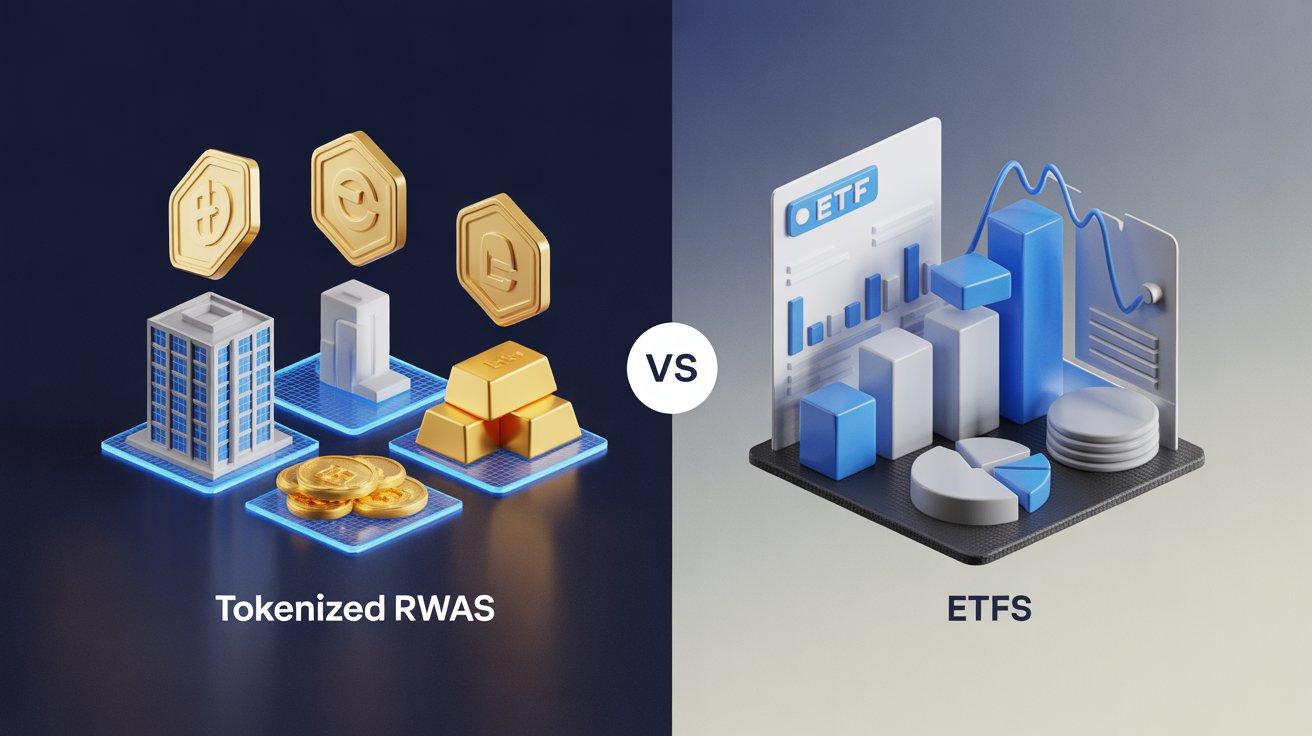
Tokenized RWAs vs. ETFs: Understanding Settlement Rails, Liquidity Models, and Institutional Failure Modes
Compare tokenized RWAs vs ETFs—how T+1 vs atomic settlement impacts liquidity, pricing, collateral use, and real institutional failure modes (AP withdrawal, oracles, smart contracts).

Dubai's Tokenized Real Estate Secondary Market: How Registry Integration Solves the RWA Trust Problem
Learn how Dubai’s registry-synced tokenized real estate enables 24/7 secondary trading—and why integration is the key moat for institutional RWAs.
Tokenized Cash: The 24/7 Yield-Bearing Wallet Guide for Institutional Investors
A comprehensive institutional guide to tokenized cash, tokenized Treasuries, yield-bearing wallets, and atomic settlement — covering fund mechanics, ERC-4626 vaults, MiCA regulation, and the infrastructure stack for the 24/7 economy.
Investing in Tokenized RWA
Set Up Self-Custody Wallet
Need MetaMask or similar Web3 wallet. Tokenized securities require KYC/AML verification. Expect 1-3 day onboarding.
Start with Tokenized Treasuries
Ondo OUSG or Franklin BENJI offer institutional Treasury exposure on-chain. Yields match traditional Treasuries (4.5-5%) with better liquidity. Minimum $5K for OUSG.
Explore Private Credit Protocols
Maple Finance, Centrifuge, and Goldfinch offer 7-11% yields on tokenized private credit. Higher risk; assess borrower quality and default rates.
Understand Gas Fees
Most tokenized RWA on Ethereum mainnet. Expect $5-20 gas fees per transaction. Larger positions ($10K+) make gas fees negligible percentage-wise.
Tokenized RWA Risks
Important considerations before investing in tokenized real-world assets
- Smart contract risk: Bugs could lead to loss of funds (audits reduce but do not eliminate risk)
- Regulatory uncertainty: SEC could change classification of tokenized securities
- Custodian risk: Off-chain assets held by third-party custodians (e.g., Coinbase, BitGo)
- Liquidity risk: Secondary markets thin; may face difficulty selling large positions
- Redemption delays: Some tokens have 1-5 day redemption windows for off-chain settlement
- KYC/AML friction: Transfer restrictions prevent true permissionless trading
- Platform risk: Issuer insolvency could freeze redemptions
Due Diligence Checklist
- Verify custodian: Check proof-of-reserves and custodian credentials (Coinbase, BitGo preferred)
- Read offering documents: Understand redemption terms, fees, and legal structure
- Check audit reports: Smart contracts should have multiple audits from reputable firms
- Assess liquidity: Can you sell $100K+ on-chain without 10%+ slippage?
- Compare to TradFi: Is tokenized version actually better than ETF/mutual fund alternative?
- Review default history: For private credit, check borrower default rates and loss provisions
Real-World Examples
Ondo OUSG: $500M+ AUM, zero defaults, 4.8% yield matching short-term Treasuries
Franklin BENJI (FOBXX): SEC-registered government money fund on nine blockchains, $686.6M net assets at August 31, 2026
Maple Finance: Experienced $40M+ in defaults during 2022 crypto bear market; tightened underwriting
Tokenized Real-World Assets: frequently asked questions
What are tokenized Treasuries?
Shares of funds that hold short-term U.S. Treasury bills and repurchase agreements, recorded as tokens on a blockchain so they can be held in a crypto wallet and moved around the clock. rwa.xyz counted $14.65 billion of tokenized Treasury products on October 27, 2026, across about 86,000 holders, led by Ondo's USDY, Circle's USYC and BlackRock's BUIDL.
How do you buy tokenized Treasuries?
It depends on the fund, and most are not open to ordinary U.S. investors. BlackRock's BUIDL is a private fund for qualified purchasers, and its Form D lists a $100,000 minimum. Superstate's USTB, now the Invesco-managed short-duration government fund, requires onboarding with a $100,000 minimum that can be waived. Ondo's USDY is available only to non-U.S. investors. Franklin Templeton's FOBXX (BENJI) is a registered U.S. money market fund held through Franklin's app.
Sources: BlackRock BUIDL Form D/A (July 2026); Superstate USTB documentation; Ondo USDY
How big is the tokenized real-world asset market?
rwa.xyz counted $39.0 billion of distributed tokenized real-world assets (tokens that can move between wallets) on October 27, 2026, not counting stablecoins, which it tracks separately at about $289 billion. Tokenized Treasuries and private credit are the largest categories.
Source: rwa.xyz dashboard
Are tokenized Treasuries safer than stablecoins?
They are different. A tokenized Treasury fund passes the Treasury yield to holders and is a security, with eligibility rules and transfer restrictions. A payment stablecoin aims to hold $1 and pays no yield to holders. Both depend on the issuer's custody of the underlying assets and on the smart contracts and blockchains used, which adds risks a traditional money market fund does not carry.
Tokenized assets reference library
Fifty explainers on what a token holder owns, how custody and redemption work, and the technical and legal risks behind tokenized real-world assets. 50 terms.
Ownership and investment structure
- Real-World Asset Tokenization
- Token Ownership vs Beneficial Ownership
- Direct vs Synthetic Exposure
- Security Entitlement
- Special Purpose Vehicle
- Bankruptcy Remoteness
- Native vs Wrapped Tokens
- Fractional Ownership
- Tokenized Treasuries
- Tokenized Money Market Funds
- On-Chain NAV
- Price vs NAV
- Accumulating vs Distributing Tokens
- Gross vs Net Token Yield
- Primary Subscription vs Secondary Trading
- Redemption Eligibility
- Redemption Minimums and Fees
- Redemption Windows and Cutoffs
- Cash vs In-Kind Redemption
- Redemption Gates
- Transfer Restrictions
- Tokenholder Voting and Distributions
Custody and recovery
Ownership records
Token controls and standards
Settlement and legal finality
Technical and structural risk
All terms: AltStreet reference index and glossary.
Advanced Guides
Inside Robinhood Chain's First Memecoin Boom: Seventeen Days of Trade Data
AltStreet decoded 19.3M Robinhood Chain swap legs: half of 150,924 tokens created in seventeen days recorded no swap in-window, and one in five eligible tokens survived a full week.
Tokenized Equities, Observed: Premiums, Frozen Quotes & Weekend Liquidity
AltStreet's daily mark and venue data: tokenized SPY above the ETF on all 17 fixings (median +58 bps), quotes frozen for entire days, and Sunday volume at a quarter of Monday's.
Explore Subcategories
Tokenized Treasuries
On-chain representations of treasuries and money-market funds.
Tokenized Private Credit
Fractional credit/debt invested via tokens.
RWA Funds & Platforms
Platforms enabling tokenized access to real-world assets.
Stablecoins & Yield
On-chain fixed-income alternatives and stablecoin yield vehicles.